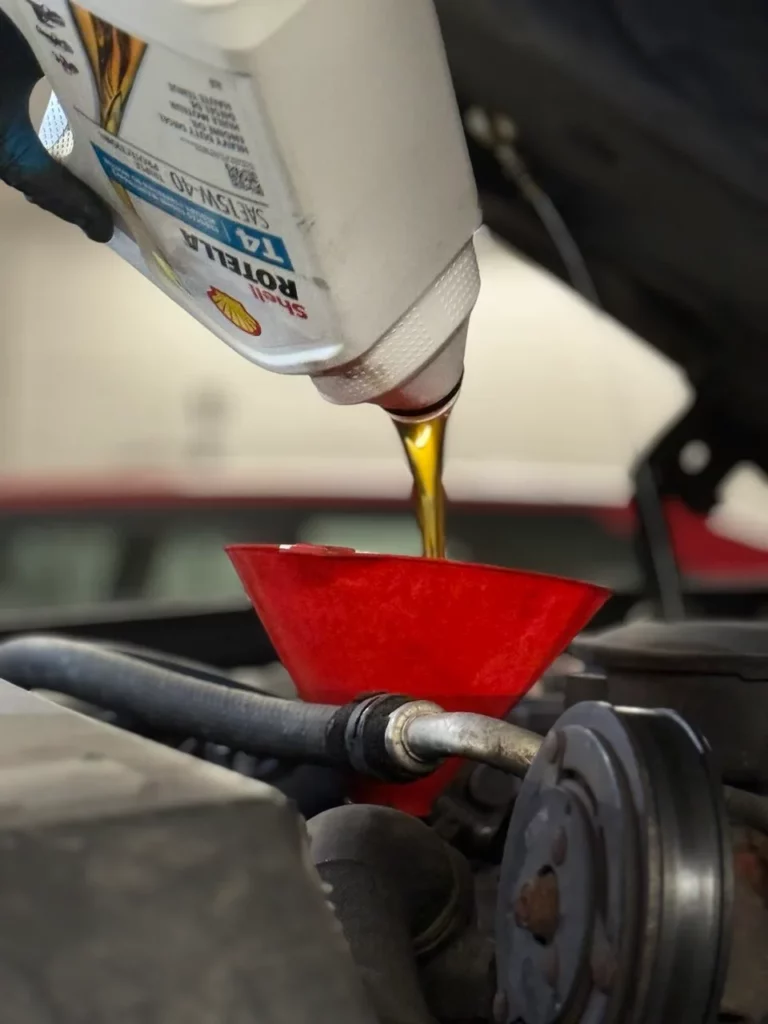
Oil-change timing depends on your engine, driving conditions and the oil specification. Here is how to build a sensible maintenance routine around your vehicle’s own guidance.
Start with the vehicle, not a universal interval
Engine oil lubricates moving parts, helps carry heat away and holds contaminants until the oil and filter are replaced. The right service interval depends on the engine and its operating conditions. A single kilometre figure cannot cover every vehicle.
Use the maintenance schedule for your exact model and engine. Check the required oil specification as well as the viscosity. A product labelled synthetic is not automatically the right oil for every engine. Manufacturer recommendations and any applicable warranty requirements take precedence over general advice.
Understand your driving pattern
Frequent short journeys, long periods of idling, towing and repeated stop-and-go use can change maintenance needs. Your manual may describe these as severe or special operating conditions. Read that definition rather than assuming it applies only to unusually hard driving.
Time matters alongside distance. A vehicle that travels little can still reach the manufacturer’s time-based service limit. Keep dates and odometer readings together in your service records.
Use the oil-life display correctly
Where fitted, an oil-life monitor estimates a service requirement from information available to the vehicle. Its meaning varies by model. It is not necessarily a direct measurement of oil level or oil quality.
Follow the manual’s instructions for oil-level checks, parking position and engine temperature. Do not exceed the maximum mark when topping up. An oil-pressure warning is different from a routine service reminder: stop safely and follow the vehicle’s emergency instructions rather than assuming an oil change alone will fix it.
Build a simple maintenance record
Keep these details together
Record the service date, odometer, oil specification and filter replacement. Save invoices or receipts. If the service history is unknown, discuss an appropriate starting point with a qualified technician instead of guessing the previous interval.
Between services, watch for leaks, changes in oil consumption or unusual engine behaviour. Symptoms can have several causes, so describe what you noticed without treating a web article as a diagnosis.
Frequently asked questions
Can synthetic oil always stay in longer?
No. The permitted interval depends on the vehicle, the oil approval and the driving conditions. Follow the manufacturer’s schedule rather than extending it solely because the oil is synthetic.
Should I change the oil if I drive very little?
Check the time-based limit in your maintenance schedule. Low annual distance does not remove the need for routine checks or scheduled service.
Is an oil-life percentage the same as oil level?
Not generally. Read the manual to understand the display, and check the level using the specified procedure. A pressure warning requires separate attention.
Make your next oil service an informed one
Review the vehicle-specific schedule and describe your driving pattern before arranging service.